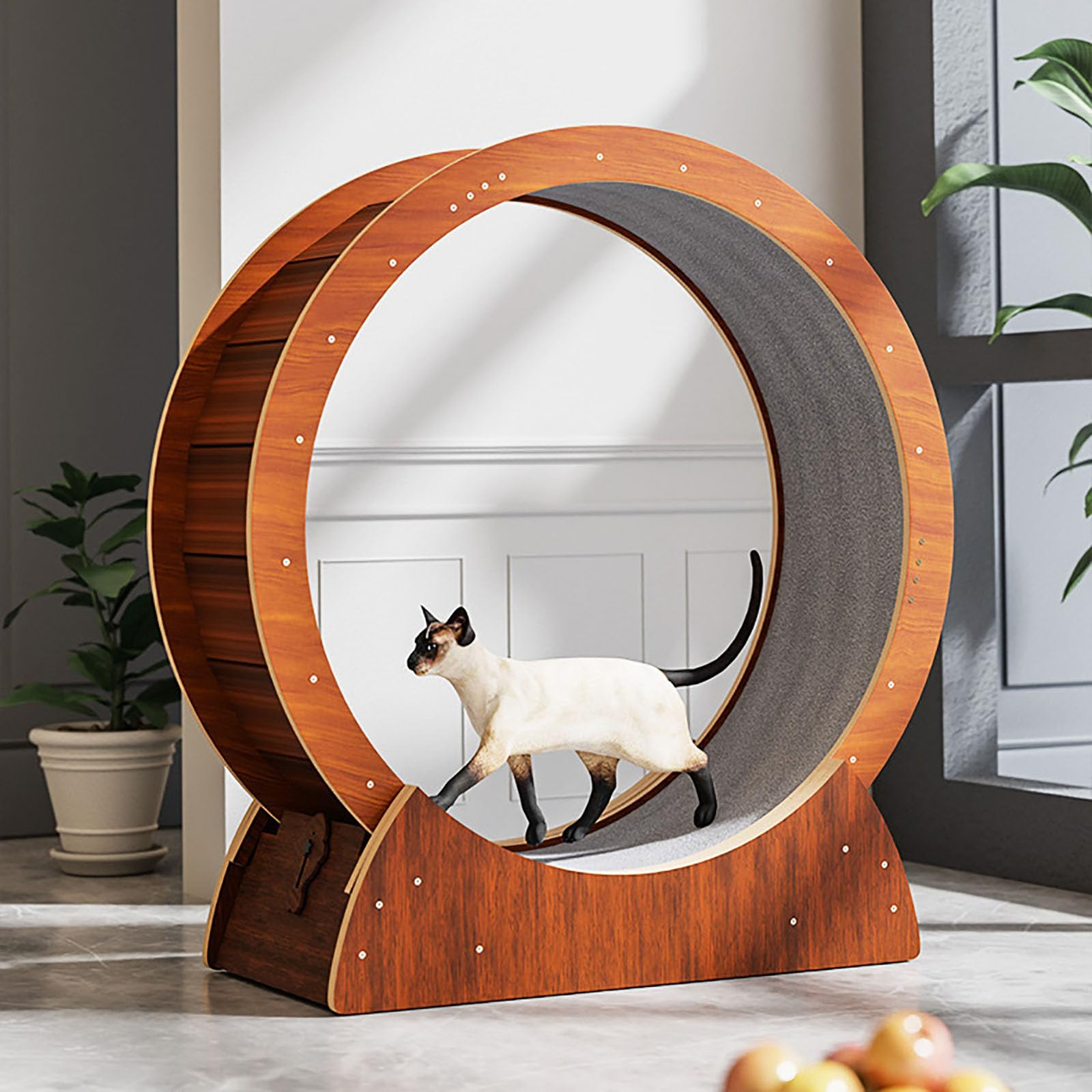
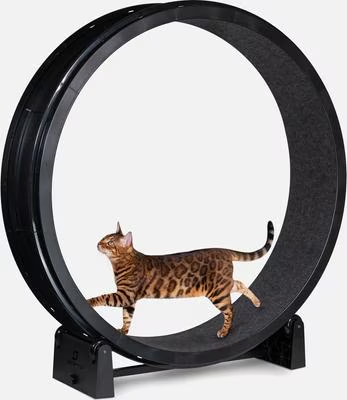
Getting your cat to use an exercise wheel is one of the best ways to burn off “zoomie” energy and keep your indoor feline at a healthy weight. However, plopping a cat onto a moving wheel and expecting them to run is a recipe for a very expensive piece of furniture.
Training a cat to use a wheel requires patience, positive reinforcement, and—most importantly—the right motivation. Here is a step-by-step guide to training your cat to use their new wheel without using laser pointers.
Want to find the perfect exercise wheel for your cat? click HERE to see our list on the best options out there
1. Let the Wheel Become Part of the Furniture
Before you try to get your cat on the wheel, they need to trust it. Cats are cautious by nature, and a 4-foot-tall plastic circle can be intimidating.
- Placement: Put the wheel in a high-traffic area where your cat already likes to hang out.
- The Scent Factor: Rub a soft cloth on your cat’s cheeks and then wipe it on the wheel. This transfers their scent to the object, making it “safe.”
- Neutral Investigation: Let them sniff and explore it for 24–48 hours before you start active training.
2. Introduce the Concept of “Inside”
The first hurdle is getting your cat to step onto the curved surface. Since wheels can be wobbly, many cats jump off the second it moves.
- The Reward System: Use high-value treats (think freeze-dried chicken, tuna flakes, or squeeze-up treats like Churu).
- Step Up: Place a treat on the bottom of the wheel. When your cat steps on to eat it, give them lots of verbal praise.
- Hold it Steady: If your cat is skittish, use one hand to hold the wheel still so it doesn’t move when they step on. This builds confidence that the surface is “solid.”
3. Creating the First Step
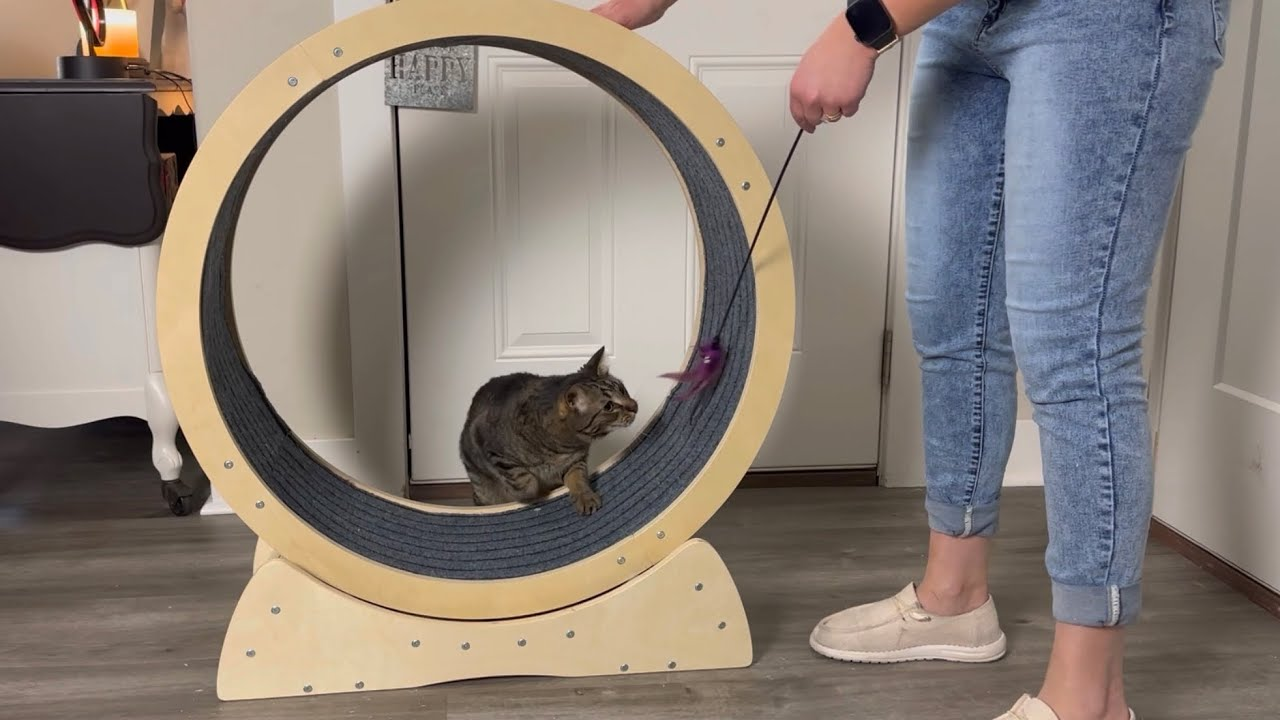
Once your cat is comfortable standing on the wheel, you need to encourage forward motion.
- The Lure Method: Hold a wand toy (like a feather teaser or a ribbon) just out of reach at about chest height.
- The Lead: Slowly move the toy up the curve of the wheel. Your cat will instinctively step forward to follow the toy.
- The Reward: As soon as the wheel moves even an inch because of their step, reward them immediately.
Pro Tip: Never pull the toy too high. If the cat has to look straight up or jump, they may lose their balance and fall, which could create a negative association with the wheel.
4. Building Momentum
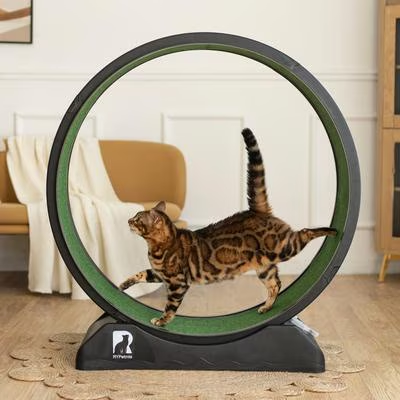
Now that they understand “walk forward = reward,” you can start building speed.
- Target Training: If your cat is food-motivated, use a “treat trail.” Hold a squeeze-up treat tube just in front of their nose and slowly lead them into a steady walk.
- Variable Speed: Gradually move the toy or treat faster. Once they hit a “trot,” keep the lure there for 5–10 seconds before letting them “catch” the toy or eat the treat.
- Short Sessions: Keep training sessions to 5 minutes or less. You want them to leave the wheel feeling successful and energized, not exhausted or bored.
5. Transitioning to Independent Use
The goal is for your cat to jump on the wheel when they want to, not just when you have treats.
- The “Look at Me” Phase: Many cats become “performance runners”—they’ll run on the wheel specifically to get your attention. When you see them step on the wheel unprompted, give them immediate praise.
- Catnip Boost: If your cat is one of the 70% that reacts to catnip, try rubbing a little on the running surface. This can trigger a burst of energy that leads to a natural sprint.
Why Skip the Laser Pointer?
While laser pointers are popular, they can actually be counterproductive for wheel training. Because the cat can never “catch” the light, it can lead to frustration and obsessive behavior. Using a physical wand toy or treats allows the cat to complete the “predatory cycle” (Hunt -> Catch -> Kill -> Eat), which is much more mentally satisfying.
How Long Does It Take?

Every cat is different. Some (especially Bengals and Abyssinians) might figure it out in ten minutes. Others may take 3–4 weeks of daily encouragement. Consistency is the secret sauce!